The common view holds that the hard part of working with data is analysing it well. Collecting is easy now. Storage is cheap and every system logs everything, so the challenge moves up a level, to reading the data correctly. That is half the story. After someone collects and analyses, someone has to do something with the result. This last step is where the work stalls, and it rarely appears in arguments about AI.
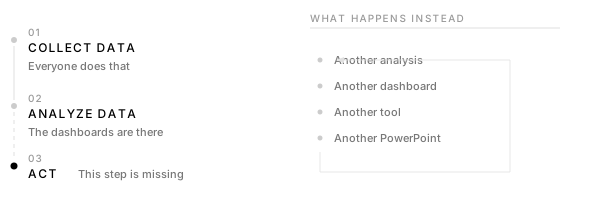
In the companies I’ve worked with, both the data and the analysis were in place. The numbers were clear. Still nothing followed. Every Monday morning the team went through the same clear figures again. Customers were leaving because satisfaction had dropped, and it showed in the reports. We discussed it every week and rarely acted on it. The analysis was never the problem. What stopped us was in the room: nobody proposed the change the numbers called for.
The AI pitch treats analysis as the bottleneck. It promises better tools and sharper models that catch the patterns a person would miss. All of it assumes the organisation acts once something becomes visible. In practice the thing is already visible and nobody moves.
Acting has consequences. Taking an analysis seriously means changing a process, redrawing a structure, sometimes replacing the person who built the thing the numbers now question. That produces resistance. The easier move is to commission another analysis. The analysis becomes a substitute for the decision.
One company I worked with ran three different AI tools on its customer data. The results came back every quarter, cleanly prepared and presented to the room. Not one of the three led to a structural change.
Data also has a political side that rarely comes up in arguments about AI. Numbers are an instrument of power. The person who brings the right figures gets the budget, and the standing that comes with it. Much of what passes for analysis exists to defend a position already held. AI only sharpens that instrument.
I watched a department commission an AI-supported analysis and then ignore the result because it did not fit the picture. They moved the time period, then the model, then the data set, until the figures confirmed what they had already decided. The tool worked without error. They ran it backward, from the conclusion to the evidence.
The honest question sits one step past all of this. Why don’t we do what we already know? That answer has no tool and no project behind it. It needs leadership, and the readiness to make a decision that costs someone something. As long as analysis stands in for that decision, a better tool changes nothing.