The Language of Self-Abolition
“Marketing without compromise. AI takes over campaign management.” The human still provides the “finishing touches.” I read the sentence twice because I wanted to make sure I understood it correctly.
Ten pages earlier it said: AI is support, not replacement. The human stays at the center. The machine assists. All good. Standard. The usual promise.
And then the machine takes over campaign management. The human provides finishing touches. Finishing touches. That’s the word people use for the last correction before something goes out. Something you could also skip.
But the AI industry doesn’t notice the contradiction. Or it notices and doesn’t consider it one. Both somehow make sense.
Language reveals what arguments conceal. AI literature is full of it. At the start, the words are “support,” “complement,” “assist.” The human acts, the AI helps. Then the vocabulary shifts. AI “takes over.” It “controls.” It “manages.” The human “provides input.” He “refines.” He “curates.”
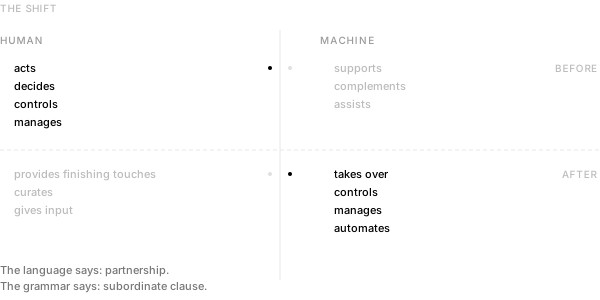
This shift doesn’t happen visibly. It happens slowly and gradually. Slowly enough that you don’t notice if you’re not paying attention. But if you look closely, the story looks quite different.
First AI supports the sales team. Then it takes over customer communication. Then it controls workforce planning. Then it manages campaigns. The direction is clearly visible and follows a clear pattern. The human gets pushed a little further to the margin at every step. But the word “replace” never appears.
That’s not sloppiness. That’s technique. There are words you can’t use in a business context because they trigger fear. “Replace” is one of them. So you use others. Take over. Control. Automate. Optimize. Each of these words describes the same process without calling it by its name.
I’ve worked with language for years, in consulting, in strategy papers, in negotiations. I’ve seen the trick often enough and used it myself. You don’t say: We’re laying people off. You say: We’re optimizing the team structure. You don’t say: The product has a problem. You say: We’ve identified improvement potential. The reality stays the same, only the feeling changes.
What’s being described is the self-abolition of the human in the value chain. Step by step. In polite language. With positive verbs. Nobody gets replaced. Everyone gets “relieved of burdens.” Nobody loses their job. Everyone gets “more strategic roles.” What a more strategic role looks like when the machine runs the strategy isn’t explained.
In the end, the human still appears in the text. He provides finishing touches. He curates. He gives input. But if you count the verbs that belong to him, three or four remain. The rest belong to the machine.
The language says: partnership. In reality, the human disappears into the subordinate clause. So look closely at who is the subject and who is the object.
How these texts are written is explained here.